March 26, 2026 by Greg
For many Canadian retirees, Old Age Security (OAS) feels like a guaranteed pillar of retirement income.
But there’s a catch — and for higher-income retirees, it’s a big one:
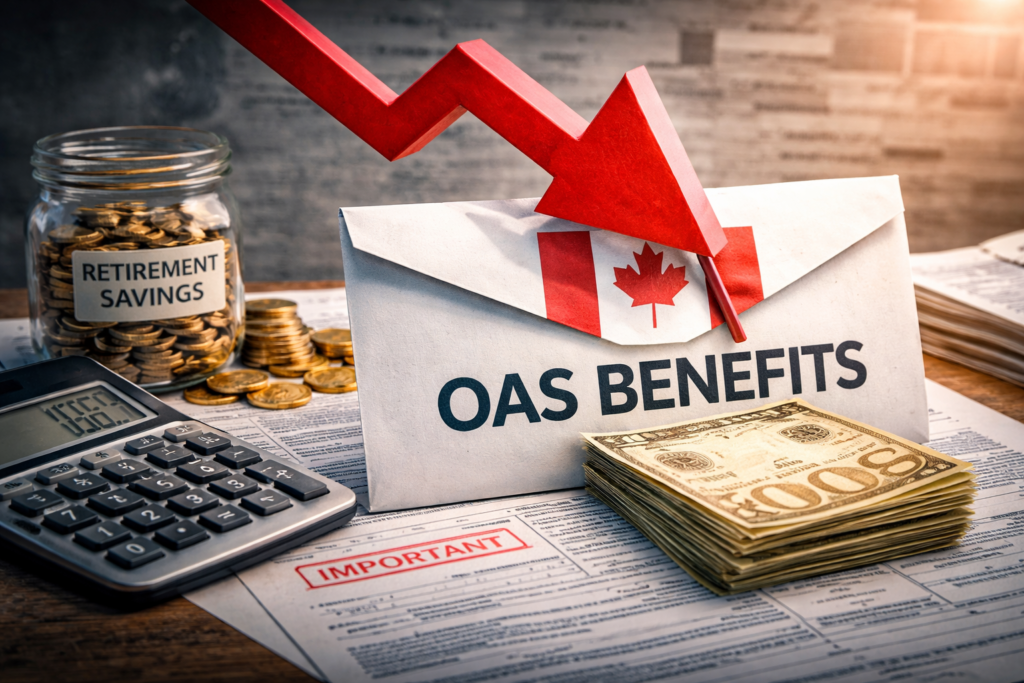
👉 The OAS clawback.
And looking ahead, there’s a growing possibility that this clawback could become more aggressive, impacting more retirees than ever before.
What Is the OAS Clawback Today?
The OAS clawback — officially called the OAS Recovery Tax — reduces your benefit once your income exceeds a certain threshold.
- Begins around ~$90,000 of net income
- Fully eliminated around ~$145,000+ (approx., indexed yearly)
- Clawback rate: 15 cents for every $1 above the threshold
This effectively creates a hidden tax rate on retirement income.
Why the Government Is Under Pressure
Canada’s demographic reality is shifting fast:
- People are living longer
- More retirees are drawing benefits
- Fewer workers are supporting the system
Programs like OAS are funded from general tax revenue — not a dedicated pool like CPP.
That means rising costs hit government budgets directly.
There are only a few levers policymakers can pull:
- Raise taxes
- Reduce benefits
- Delay eligibility
- Or… increase clawbacks on higher-income retirees
And politically, targeting higher-income seniors is often the least controversial option.
What Changes Could Be Coming?
While nothing is confirmed, policy discussions and fiscal pressures suggest a few realistic scenarios:
1️⃣ Lower Clawback Thresholds
More retirees could be pulled into the clawback range sooner.
👉 What used to affect only higher earners may begin impacting middle-income retirees.
2️⃣ Higher Clawback Rates
The 15% recovery rate could increase.
Even a small change would significantly raise effective tax rates in retirement.
3️⃣ Expanded Definition of Income
Governments could tighten rules around what counts as income:
- Dividends
- Capital gains
- RRIF withdrawals
This would reduce planning flexibility.
The Real Impact on Your Retirement
This is where it gets serious.
1️⃣ Your “Safe Withdrawal Rate” May Not Be So Safe
If more of your income is clawed back, your net spendable income drops.
That means:
👉 You may need more savings than you think
👉 Or reduce your lifestyle later in retirement
2️⃣ RRIF Withdrawals Become a Tax Trap
Mandatory RRIF withdrawals can push income higher — even if you don’t need the money.
This can:
- Trigger or increase OAS clawbacks
- Push you into higher tax brackets
- Reduce after-tax income
3️⃣ Timing CPP and OAS Matters More Than Ever
Delaying benefits can increase payments — but also increase exposure to clawbacks if income is already high.
There’s no one-size-fits-all answer anymore.
👉 Strategy matters more than ever.
4️⃣ “Success” Could Be Penalized
Ironically, disciplined savers may be hit hardest.
Those who:
- Built strong RRSPs
- Have investment income
- Own income-generating assets
…could see a portion of their government benefits reduced or eliminated.
What You Can Do About It
You can’t control government policy — but you can control your strategy.
Some key considerations:
✔️ Manage Taxable Income Carefully
Smooth withdrawals over time instead of large spikes.
✔️ Consider Earlier RRSP Drawdowns
Strategic withdrawals before age 65–71 can reduce future RRIF pressure. See related article here
✔️ Use TFSA Strategically
TFSA withdrawals do not count as income for OAS purposes.
This is one of the most powerful planning tools available.
✔️ Think Long-Term, Not Just Year-to-Year
Avoid decisions that look good today but create problems later.
The Bottom Line
OAS is still a valuable part of retirement income in Canada. Read related articles about OAS here.
But it’s no longer something you can treat as fully guaranteed in its current form — especially if you have higher income.
The real risk isn’t just market volatility or inflation.
It’s policy changes that quietly reduce your income over time.
And the retirees who plan ahead — not react — will be the ones who protect their lifestyle. Use our OAS clawback calculator here.
As always thanks for reading,
Greg
This article is for informational and educational purposes only and does not constitute financial, investment, tax, or retirement planning advice. Individuals should consult with a qualified professional regarding their personal situation before making financial decisions.