The RDSP: Canada’s Most Powerful —
and Most Overlooked — Savings Plan
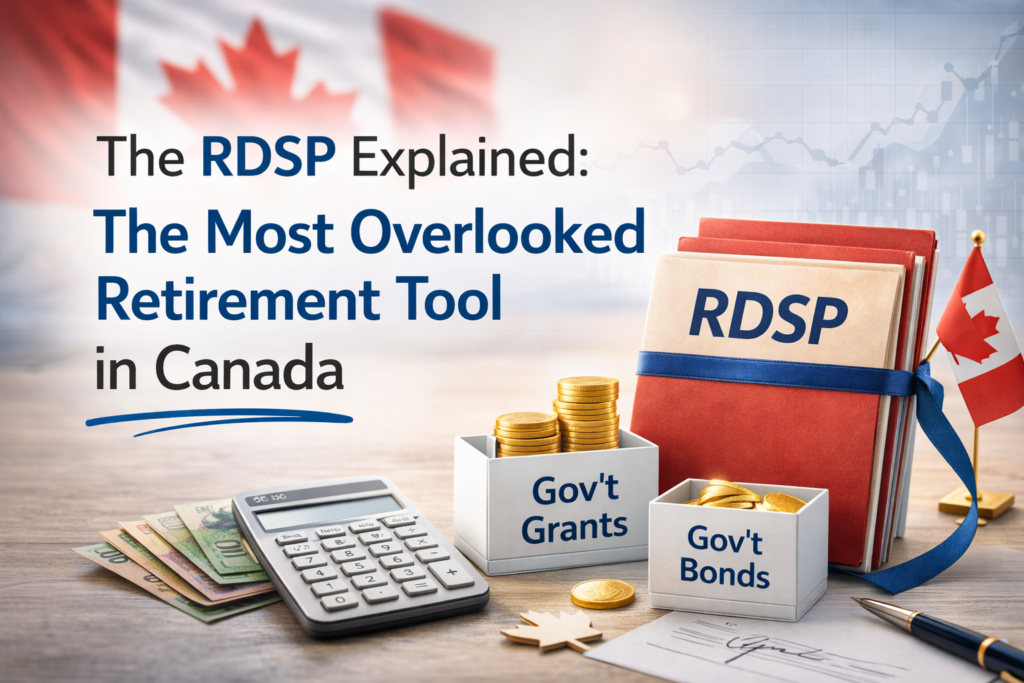
Less than a third of eligible Canadians have one. The government will contribute up to $90,000 in free money. And almost nobody talks about it. If you or someone you love has a disability, this plan could be one of the most important financial decisions you’ll ever make.
BY Greg · MARCH 2026 · 12 MIN READ
$200KLIFETIME CONTRIBUTION LIMIT
$70KMAX GOVERNMENT GRANTS (LIFETIME)
$20KMAX GOVERNMENT BONDS (LIFETIME)
<30%OF ELIGIBLE CANADIANS WHO ACTUALLY HAVE ONE
The Registered Disability Savings Plan is arguably the most generous savings vehicle the Canadian government has ever created — and the least known. Less than a third of the people eligible to open an RDSP in Canada actually have one, and almost half of those who don’t have one haven’t even heard of it. With nearly 1.5 million Canadians eligible, that means around a million people are missing out on a plan that includes up to $90,000 in free government contributions, tax-sheltered growth, and a powerful tool for long-term financial security.
If you or a family member has been approved for the Disability Tax Credit, this blog is for you. Here is everything you need to know — the rules, the numbers, the traps to avoid, and the steps to get started.
What Is the RDSP?
A Registered Disability Savings Plan is a savings plan intended to help an individual who is approved to receive the Disability Tax Credit to save for their long-term financial security. It works similarly to an RESP — the government contributes matching grants and bonds on top of your personal contributions, and everything inside the plan grows tax-sheltered until withdrawn.
Unlike an RRSP, contributions to an RDSP are not tax deductible. However, the trade-off is enormous: the government will add up to $3,500 per year in matching grants and up to $1,000 per year in bondsfor low-income families — with no contribution required to receive the bond. By the time a beneficiary starts collecting Disability Assistance Payments at age 60, based on an average investment growth rate of 5% per year, the RDSP can grow to over $773,000 — even from modest family contributions.
Who Is Eligible?
ELIGIBILITY REQUIREMENTS
Disability Tax Credit (DTC) ApprovedThe beneficiary must be approved for the federal Disability Tax Credit — a non-refundable tax credit available to those with a severe and prolonged impairment in physical or mental functions. Apply through the CRA using Form T2201, completed by a medical practitioner.
Canadian Resident The beneficiary must be a Canadian resident when the plan is opened and when each contribution is made.
Under Age 60 to Open The beneficiary must be under age 60 when the plan is opened, since contributions cannot be accepted after the end of the year the beneficiary turns 59.
Valid SIN The beneficiary must have a valid Social Insurance Number.
It is important to note that the DTC application is the essential first step. Many Canadians who qualify — including those with autism, Type 1 diabetes, mental health conditions, vision or hearing impairments, and many other conditions — have never applied. If you are unsure whether a family member qualifies, speak with a doctor or tax professional about completing Form T2201.
The Canada Disability Savings Grant (CDSG)
The Canada Disability Savings Grant is the most powerful feature of the RDSP. The federal government pays a matching Canada Disability Savings Grant of 300%, 200% or 100%, depending on the beneficiary’s adjusted family net income and the amount contributed. An RDSP can get a maximum of $3,500 in matching grants per year, and up to $70,000 over the beneficiary’s lifetime.
Here is how the matching works for 2026, based on family net income:
| Family Net Income (2026) | On first $500 contributed | On next $1,000 contributed | Max annual grant |
|---|---|---|---|
| $117,954 or less | 300% ($1,500) | 200% ($2,000) | $3,500 |
| $117,954 to $167,987 | 100% ($1,000) | No additional grant | $1,000 |
| Above $167,987 | 100% up to $1,000 | No additional grant | $1,000 |
The big insight: For families with income under $117,954, contributing just $1,500 per year triggers the full $3,500 in annual government grants. That is a 233% return on your contribution before any investment growth. There is no financial instrument in Canada that comes close to matching this.
Carry-forward grants: Unused grant and bond entitlements can be carried forward for up to 10 years, before the end of the year the beneficiary turns 49. This means families who open an RDSP late can catch up on missed grant entitlements — but only if they act before the beneficiary turns 49.
The Canada Disability Savings Bond (CDSB)
The Canada Disability Savings Bond is even more remarkable for low-income families: you do not need to contribute a single dollar to receive it. The government deposits the bond automatically into your RDSP based on family income alone.
| Family Net Income (2026) | Annual Bond Amount | Lifetime Maximum |
|---|---|---|
| $36,502 or less | $1,000 / year | $20,000 |
| $36,502 to $55,867 | Partial bond (prorated) | Up to $20,000 |
| Above $55,867 | No bond | — |
For a family that qualifies for both the maximum grant and maximum bond, the government contributes $4,500 per year on top of the family’s $1,500 contribution — giving the plan $6,000 in total annual inflows. Over 10 years, that is $45,000 from the government alone, before any investment growth.
A Real Example: What the RDSP Can Actually Build
Example: Sarah, approved for DTC at age 10. Family income $80,000. Contributes $1,500/year.
Annual family contribution$1,500
Annual government grant (300% on $500 + 200% on $1,000)$3,500
Total annual inflow into RDSP$5,000
Years of contributions (age 10 to 49)39 years
Total family contributions over 39 years$58,500
Total government grants received$70,000 (lifetime max)
Estimated plan value at age 60 (5% growth)~$773,000
Sarah’s family contributed$58,500 to grow $773,000
Contribution Rules to Know
- 💳Lifetime limit of $200,000 — no annual limitThere is no annual limit on amounts that can be contributed to an RDSP of a particular beneficiary in a given year. However, the overall lifetime limit for a particular beneficiary is $200,000. Contributions above the amount needed to maximize grants are allowed but do not attract additional matching.
- 👥Anyone can contribute — with the holder’s permissionAnyone can make an RDSP contribution, as long as they have written consent from the RDSP holder. Family members, friends, employers — any person who wants to support the beneficiary’s financial future can contribute.
- 📅Contributions end at age 59Contributions to an RDSP are not tax deductible and can be made until the end of the year in which the beneficiary turns 59. Government grants and bonds stop at age 49.
- 🔄RRSP and RRIF rollovers are allowedThe RDSP rules allow for a rollover of a deceased individual’s RRSP or RRIF proceeds to an RDSP of the deceased individual’s financially dependent child or grandchild with an impairment in physical or mental functions. This can be a powerful strategy for parents leaving assets to a child with a disability.
- 📋Statement of Entitlement every FebruaryThe Canada Revenue Agency will issue a Statement of Entitlement every February until the beneficiary turns 49. This statement tells you exactly how much grant and bond you are eligible for and how much you need to contribute to maximize it. Use this every year.
Withdrawals: How and When You Can Access the Money
Withdrawals from an RDSP work differently than other registered plans. There are two types:
| Withdrawal Type | When Available | Tax Treatment | Key Rules |
|---|---|---|---|
| Lifetime Disability Assistance Payments (LDAPs) | Can begin anytime; must begin by Dec 31 in year beneficiary turns 60 | Grants, bonds, and investment growth are taxable income; original contributions are not | Regular ongoing payments; cannot exceed a formula-based annual maximum |
| Disability Assistance Payments (DAPs) | Any time, for any reason | Same — grants, bonds, and growth are taxable; contributions are not | One-time lump-sum withdrawals; may trigger 10-year repayment rule if taken early |
For 2026, no withholding tax is applied if the total taxable portion of LDAPs combined with the taxable portion of DAPs stays below $26,793. Since most beneficiaries have low or modest income, RDSP withdrawals are often taxed at a very low rate — making the plan even more efficient.
⚠️ THE 10-YEAR REPAYMENT RULE — CRITICAL TO UNDERSTAND
If you withdraw from the RDSP before the beneficiary turns 60 and the plan has received government grants or bonds in the previous 10 years, you must repay $3 for every $1 withdrawn from those government contributions — up to the full amount of grants and bonds received in the last decade. This is called the Holdback Amount. Early withdrawals can wipe out years of government contributions. Plan withdrawals carefully and avoid DAPs unless absolutely necessary before age 60.
What Happens if the Beneficiary Loses DTC Eligibility?
If the beneficiary loses eligibility for the DTC, you can keep the account open or close the plan. If you decide to keep the plan, you cannot make any additional contributions or receive government grants and bonds. In addition, if a withdrawal is made from the plan prior to the beneficiary turning 60, the grants and bonds received in the previous 10 years have to be repaid. If the beneficiary regains DTC approval, you can restart making contributions and will resume receiving government bonds and grants.
The RDSP and Provincial Benefits
✅ GREAT NEWS FOR PROVINCIAL BENEFIT RECIPIENTS
Assets and income from an RDSP will not affect AISH or ADAP eligibility. The taxable income from an RDSP — grants, bonds, rollovers, and investment earnings — is excluded from income when calculating income-tested benefits such as the GST credit and the Canada Child Benefit. Most provinces have also exempted RDSP assets from disability benefit calculations, though rules vary. Check with your provincial program for specifics.
How to Open an RDSP: Step by Step
1
Apply for the Disability Tax Credit (DTC) Complete Form T2201 https://www.canada.ca/en/revenue-agency/services/forms-publications/forms/t2201.html with a qualified medical practitioner and submit it to the CRA. This is the essential gateway — you cannot open an RDSP without DTC approval. Processing typically takes 8–12 weeks.
2
Choose a financial institution Not all banks and institutions offer RDSPs. Major providers include RBC, TD, BMO, Scotiabank, CIBC, and credit unions. Compare investment options and fees. Some institutions offer limited investment menus — look for one that offers ETFs or mutual funds, not just GICs.
3
Determine who will be the plan holder The plan holder manages the RDSP — makes contributions, chooses investments, and authorizes withdrawals. If the beneficiary is an adult with capacity, they can be their own holder. Otherwise, a parent, legal guardian, or public trustee can act as holder.
4
Apply for the Canada Disability Savings Grant and Bond When opening the RDSP, ask the financial institution to apply for both the CDSG and CDSB. This is done through Employment and Social Development Canada (ESDC). You will need to file your taxes each year to ensure the income information is on record — grants and bonds are calculated using income from two years prior.
5
Contribute the right amount to maximize grants Rwview your Statement of Entitlement each February. For families with income under $117,954, contributing $1,500 per year unlocks the full $3,500 annual grant. Set up automatic contributions so you never miss a year of free government money.
6
Review the plan regularly with an advisor The RDSP has specific rules about carry-forward grants, the 10-year holdback on withdrawals, and changes in income thresholds. A financial advisor familiar with RDSPs can help you maximize the plan year by year — and avoid costly mistakes like early withdrawals.
The Bottom Line
The RDSP is one of the most generous financial tools the Canadian government has ever created — and one of the most underused. For families supporting a person with a disability, the combination of government grants, government bonds, tax-sheltered growth, and protection of provincial benefits makes it a cornerstone of long-term financial planning.
The cost of not opening one is significant. Every year without an RDSP is a year of grants and bonds that can never be fully recovered after age 49. If someone in your family has been approved for the Disability Tax Credit — or might qualify and has never applied — this is the conversation worth having today.
The government has set aside up to $90,000 for eligible Canadians. The only question is whether you claim it.
This article is for informational and educational purposes only and does not constitute financial, legal, or tax advice. RDSP rules, grant thresholds, and bond amounts are updated annually by the CRA. Please consult a qualified financial advisor and the Canada.ca RDSP pages for the most current information and guidance specific to your situation.
2026 KEY NUMBERS
$200,000Lifetime RDSP contribution limit
$3,500Max annual government grant (CDSG)
$70,000Lifetime grant maximum
$1,000Max annual government bond (CDSB)
$20,000Lifetime bond maximum
$1,500Contribution needed to maximize annual grant (lower income)
Age 49Last year to receive grants and bonds
Age 60Withdrawals (LDAPs) must begin by this age
RDSP CHECKLIST
- Apply for the DTC Form T2201 — first step to RDSP eligibility
- Open RDSP at a financial institution Compare investment options before choosing
- Apply for CDSG and CDSB Done when opening the plan
- File taxes every year Grants and bonds use income from 2 years prior
- Contribute $1,500/year To maximize annual grants (lower income families)
- Review Statement of Entitlement issued every February by CRA
- Avoid early withdrawals 10-year repayment rule applies to grants/bonds
- Review carry-forward room Especially if opening later in life
As always thanks for reading ,
Greg
@2026 www.Canadaretirementincome.ca Blog For informational purposes only · Not financial advice