
BY-Greg-March01/26
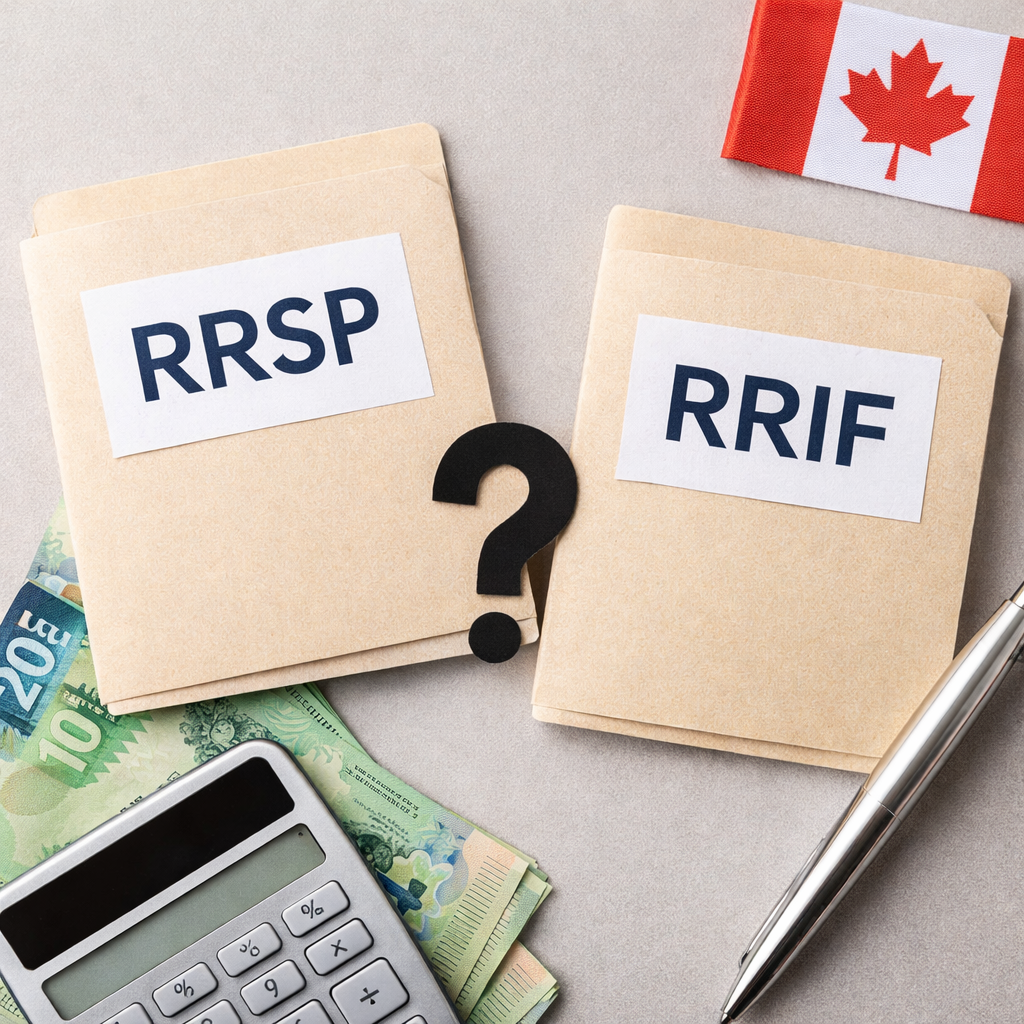
Many Canadians hear the terms RRSP and RRIF used interchangeably — but they serve different purposes.
If you’re wondering which one you need, here’s the simple explanation.
The Quick Answer
RRSP = Saving for retirement
RRIF = Taking income in retirement
Think of it as two stages of the same plan.
RRSP (Registered Retirement Savings Plan)
An RRSP is designed to help you build retirement savings.
Key features:
- Contributions are tax-deductible
- Investments grow tax-deferred
- Withdrawals are taxable as income
- You can contribute until December 31 of the year you turn 71
RRSPs are best during your working years when your income — and tax rate — is higher.
RRIF (Registered Retirement Income Fund)
A RRIF is used when you’re ready to withdraw income from your retirement savings.
Key features:
- Created by converting your RRSP
- Must be done by the end of the year you turn 71
- Requires minimum withdrawals each year
- Withdrawals are taxable
- Investments continue to grow tax-deferred
Once your RRSP becomes a RRIF, you can no longer contribute.
RRSP vs RRIF: Side-by-Side
| Feature | RRSP | RRIF |
| Purpose | Save for retirement | Provide retirement income |
| Contributions allowed | Yes | No |
| Tax deduction | Yes | No |
| Withdrawals | Optional | Minimum required annually |
| Deadline | Must convert by age 71 | Continues for life |
When Do You Switch from RRSP to RRIF?
You have three options:
- Convert to a RRIF
- Buy an annuity
- Withdraw the full amount (usually not recommended due to taxes)
Most Canadians choose a RRIF because it allows flexibility and continued investment growth.
You don’t have to wait until 71 — some retirees convert earlier to manage taxes and smooth income.
How RRIF and RRSP Work with CPP and OAS
This is where planning matters.
RRIF and RRSP withdrawals:
- Count as taxable income
- Can increase your tax bracket
- May trigger the OAS clawback if income gets too high
For 2026 (estimate), OAS starts to be reduced when income is around:
$90,000+
Large RRIF withdrawals later in life can push you into this range if not planned properly.
A Common Strategy
Many retirees use the “income smoothing” approach:
Age 60–65
- Low income years
- Withdraw small amounts from RRSP
Age 65–70
- Start OAS
- Consider when to start CPP
- Continue controlled withdrawals
After 71
- Smaller RRIF balance
- Lower mandatory withdrawals
- Less risk of higher taxes or OAS clawback
Why This Matters
If you wait until 71 with a large RRSP:
- Minimum withdrawals start around 5%+
- Amounts increase every year
- Taxes may be higher for life
Planning withdrawals earlier can reduce your lifetime tax bill.
Key Takeaways
- RRSP is for saving; RRIF is for retirement income
- You must convert your RRSP by age 71
- RRIF withdrawals are taxable and mandatory
- Large withdrawals can increase taxes and reduce OAS
- Planning early can help smooth income and lower lifetime taxes
Final Thought
Retirement planning isn’t just about how much you save — it’s about how you turn those savings into income.
Understanding the difference between RRSPs and RRIFs is one of the most important steps in building tax-efficient retirement income.
The best retirement investment isn’t timing the market — it’s timing your income.
-As always thanks for reading
Greg
This article is for informational purposes only and does not constitute financial or tax advice. All figures and scenarios are illustrative. Please consult a qualified financial advisor for guidance specific to your situation.
© 2026 www.canadaretirementincome.ca